Sunday, April 16, 2017

Is Stayzilla right? Is Jigsaw wrong?

Neither am I a legal professional nor have I enough information to make a judgement or give an opinion on the ongoing tussle between Stayzilla and Jigsaw. I'm absolutely no authority on such matters. But what I do have is a memory and an emotion.

In 2000, after completion of an MBA, I joined a small ad agency in Chennai. The agency was owned by a lady. A first generation entrepreneur who came from a humble background. She had worked hard to establish the agency. She had done some incredible work and was the reason behind the successful branding campaign for an Oracle database training institute in Chennai. Thanks to her creativity and smartness, she helped the institute establish itself as the top Oracle database training institute in the city. In a way, she was behind the bright colored posters which became the norm for many IT training institutes.

Then came an opportunity, a big one at that. Another IT training institute that used to compete with NIIT and Aptech (the leading training institutes at that point of time in India) handed a contract for running their entire campaign in the South.

I was part of the pitching and servicing team. It was a great experience. The work was hectic. I would liaison with multiple points of contact at the client place who had their own ideas of creativity. I collaborated with visualizers and copywriters marveling at what they could churn out. And finally the job also required running to media houses with the artwork before the deadline.

The advertising industry has always been a very competitive space. Agencies, especially the small ones, are always squeezed. Not only did clients extract a great discount but also demanded longer credit periods. This client of ours was no different.

Two months in the relationship and submission of invoices, the client was not processing the payments. Soon, I quit and joined the PR industry. But I kept in touch with my ex-colleagues and found out that my ex-employer was still not receiving the payments. There was a danger of the agency losing its licence. The agency were I began my career was in a shambles. Later on, I gathered that there was some sort of agreement on the payments. However, the delay had already taken its toll. The lady had to merge the agency with another company. The team disbanded.

And my ex-boss who until then was a job provider was now herself in the job market!

Saturday, February 18, 2017

Swacch Bharat and Dog Poo

The day Indians start picking up their dog’s poo, India would have become Swacch. Before you start mocking my thought let me admit that spitting and urinating are far worse habits of Indians and far bigger endemic. I acknowledge it. But allow me to make a point. 

You will agree that most dog owners, especially the ones that have pedigree dogs, belong to the upper rungs of society. This cross-section of people (it is safe to assume) usually have better education, exposure and affluence. Then the natural assumption is that they would be far more involved in issues such as sanitation and cleanliness. 

The truth though is that this section of the society is probably not as sensitive as we assume they should be. And that includes me. I have a dog now and had one more a few years ago. For all the 11 years that Cheeku lived with us, I never ever cleaned up poo that he dumped on the streets, roads, and pavements. I was never responsible. And till about a year back, I never picked up after Pumpkin. But now I do. 


So what changed? As a stay-at-home husband who had an opportunity to live in Amsterdam for a year, I found too much time at my disposal and hence I signed up for dog walking services. In addition to walking a dog for a minimum of an hour, the most important part of the job was to pick up the dog’s poo and dispose it. Things were easier. Most parks and pathways had special plastic covers stocked solely for this purpose. One could also easily find a dustbin to dispose of the filled bags. That was my initiation. 

When we returned to India, I came back with my new habit. Every time Savitha, my wife, and/or I take Pumpkin for a walk, we ensure we take one of these plastic bags that we bring back home from shopping to pick up Pumpkin’s poo. Thankfully for us, there are many dustbins in our locality so disposing of filled bags is easy. 

We, probably, are an exception. We live in a relatively affluent locality with nice pavements and roads. Often during my walks, I find dog poo in the middle of the road and on the pavements on which probably an unsuspecting person would have stamped upon and probably slipped making a long stretch of poo. 

It is not that Indians don’t know about hygiene and cleanliness. We probably have very high personal hygiene levels but when it comes to sensitivity to public hygiene, we are uninitiated. 
Neither is it the first time we are learning about the importance of being or becoming Swacch. One of the important teachings of Mahatma Gandhi was cleanliness. Why do thoughts not translate into habits? What would make us sensible and responsible as far as public hygiene is concerned?


Probably, I am very pessimistic about India ever becoming clean. But then, if the crème-de-la-crème of the society cannot take responsibility of cleaning up after their dogs, how can we expect the masses to stop spitting and urinating? 

PS: A slightly modified version of this blog was submitted to Avenues Harrington Road, a monthly journal which appeared in print in the February edition. 

Thursday, February 16, 2017

Paleo Diet, Change Management, Elephant, Rider & Heath Brothers

I am fat. I am diabetic. I am foodie! It is a no-brainer that this is a lethal combination.

The easy solution prescribed is exercise and eat healthy. In reality it is not as easy as it reads! I exercise. I have played tennis for over a decade and then squash for a year.

The weak link here is the diet. Despite being aware of the perils of uncontrolled intake of carbohydrates, I could never get myself to eat less. I have been a prolific eater since childhood. Not that I have not tried eating less but every time I started a regime, I lost the battle within a short period.

And then about 20 days back, I discovered paleo diet. I had already heard and read about it but it was a visit from a friend that nudged me. Though he was always thin, he now looked emaciated. Tending to skinny. "Thanks to paleo", he said, "in addition to shedding weight, I have also successfully conquered diabetes."

What can I say, I was impressed and duly motivated. Now, after about a month of the paradigm shift in my eating pattern, I can myself see the effects. Both in weight loss and blood sugar control.

I wondered what has changed, this time. Why did my previous attempts fail while I seem to be in control this time. Of course, there are two more months to go, I do believe that something is different this time. How did I manage to control my gluttony?

My blog is not about paleo but about Switch, a wonderful book on change management by Heath Brothers - Chip and Dan. Incidentally, I began reading the book around the same time I embarked on the new diet. To me diet was a dirty word, a word that stressed me out. Almost all other diets tell us to eat limited quantity. Two chapattis, a cup of this or a cup of that. Unacceptable!

On the other hand, paleo is about eating as much as one wants. Only carbs are cut off or limited to a great extent. What probably did the trick for me is there were no constraints in the amount one could eat.

According to Chip and Dan, there are three key elements to change management:
  1. Directing the rider, the rational being
  2. Motivating the elephant, the emotional side 
  3. Shaping the path
I am finding out that I am finally succeeding in the pursuit of health due to the various factors within the three elements that are finally coming together. I had the bright spots before me, I found the feeling and built habits that suited me. Though in all these, the clinching factor is - eat as much as you want. While the rider knew the benefits of diet, the elephant in me didn't budge because eating less was a no go.

If you are grappling with the issue of change management in your personal, professional or organizational level, Switch is your solution. 

Thursday, June 02, 2016

Raghuram Rajan, Dosa, Public Speaking and French Hésitation!

It is difficult, actually impossible, not to like Raghuram Rajan, Governor of Reserve Bank of India. He has a charming face and a disarming smile. He looks intelligent and when he speaks knowledge pours. Unless you are Subramanian Swamy, you are bound to take a liking for this gentleman. In fact, I love him!

Then there is an equally accomplished Arvind Subramanian, the Chief Economic Adviser to Government of India. Whether you like economics or not watch this joint interview. No, I am not trying to pit one against the other. Rather I want you to observe how these two men speak.

As a young professional, I once attended a public speaking workshop. During the workshop, we had to make presentations. I had assumed that I was, if not accomplished, at least a confident speaker. I was in for a shock, the feedback from the trainer crushed my confidence. He pointed out that between each sentence and within them, I had used many aaa's (read stammer), elongation, and pauses. If you still can't visualize, notice the difference between the way the Governor and the Adviser speak. While the latter uses a lot of extensions, repetitions, pauses and hesitations, the former's thoughts flows like a river. He doesn't pause, there is almost no stammer.

What does stammer and hesitation or their absence indicate? 

If one is able to speak without any pause or stammer it indicates mastery over the subject. The rate of delivery and the rate of thinking are in sync. They buy time for the brain to formulate the thought to be delivered. Imagine them to be the hourglass icon or rotating circle which appear on your computer while it loads.

According to my candid trainer, they are to be avoided. They are not acceptable.

The French are different

Au contraire, there is French, a language that I am learning, currently. The one thing that strikes is how the French liberally use long pauses and hesitations while speaking. Surprisingly, they are an important part of the language. In fact, it is even part of the course where one learns how to use them!

So, to stammer or not to stammer? 

Personally, if I am aware of an answer my brain would not require the time to formulate it. Of course, then there is preparation. Preparation can train the mind and ensure elimination of the thinking process. And here is why I love Raghuram Rajan. Even when posed a question on dosa and economics, he doesn't seem to consume many pauses. That certainly reflects his comprehension.

To answer the question as to whether stammer, hesitation and extension is acceptable, it is no. At least as far as speaking in English is concerned. And certainly not in the corporate world.

I presume a state of speaking coherently comes with in-depth acquisition of knowledge, understanding of its implications and honing of articulation skills.

As for me, I don't foresee reaching that state in near future. D'où, I seek refuge in French. 

Wednesday, May 25, 2016

How To Quit Smoking & Other Addictions?

In 1995 when I was pursuing Hotel Management at IHM, Chennai, a new young F&B Services lecturer during his introductions mentioned that he was a smoker. After his eloquent spiel, he encouraged that we ask him questions. Without a second thought I asked him why he smoked. As soon as I had done with my question, I realized the folly. The whole class was laughing, not sure whether at his position or at my mindlessness.

Anyway, he took it well and explained how smoking increases the nicotine level in the body and with time when the levels come down, there is a desire to smoke again and maintain the levels. And thus the addiction.

Soon after that I picked up smoking. From 1995 till about 2000, I smoked. Of course, I was never a heavy smoker.

Then on January 1, 2001, I decided to quit. It was no resolution. It was just a desire to quit. And I did. For a pretty long time. Then suddenly one fine day, I lit a stick in 2006. Since then I have had a discontinuous relationship with tobacco.

Do you suffer from an addiction - smoking or drugs or a relationship? Relationship? In my opinion, loss of a loved one or a break up, can cause similar and probably more stress than withdrawal from other forms of addiction.

How do we overcome addictions?

I am no expert either in medicine or psychology but I have experience to share. And I know that this is not a holistic view.

Here are my "two cents" on the subject. In my opinion, the major contributor to addiction is the periodicity and frequency. If you are a smoker, one would understand this better. In my case, the smoking was always at certain points. Here is how my day burned. At 10 am soon after reaching the office, then at around 11.30 during a tea break, the essential post-lunch smoke, evening tea break and, finally, at the end of office hours. It was clockwork.

Interestingly, I never have had the urge to smoke on holidays or when I am at home. If my professor was right the nicotine levels should have reduced and thereby increasing my urge to smoke.

So this is my hypothesis. It is not necessarily the nicotine or any other chemical as the case might me. More important is to become aware of the "habit". More than anything else, the withdrawal symptom sets due to abstinence.

The most grueling aspect of kicking an addiction is to actually go through it. The disruption of pattern causes stress and emotional suffering. Often we are not adept at handling such situations even if we have undergone such experiences in the past. As I said, I am no expert on addiction but I find an experience recounted by Dan Ariely very relevant. In the video you will hear about Dan talking about an injection that he had to take to counter a liver problem. Not necessarily the same scenario but in  my opinion reward substitution is an effective way to manage addictions. If you are not a braveheart, then a diversion may help deal with the misery.

Of course, time is the biggest healer. Perseverance and patience helps. 

Friday, April 22, 2016

Why I hate Jugaad?

Jugaad has come to define Indian innovation. Books have been written about it. It is being glorified and acknowledged in B-schools.

To those uninitiated, it is the innate ability of Indians to find innovative solutions to problems faced. The uniqueness is that they are created with the least possible resources.

Initially a fan, I have come to think of it as our bane. It best represents the Indian mindset. Don't get me wrong, there is a need for people to be frugal but that should not be the only way of life. Certainly, jugaad is something we all Indians must try to overcome.

Why Jugaad?

As I said, Jugaad is the child of lack of resources. As a nation that is still emerging from being a third world country, we have been trained to do with what is available. For us everything has to be cheap and best. It has become ingrained into our subconscious. Short-cut is now hardwired into us. Even if we have resources, we will still think of cutting corners.

What does it actually mean? 

Jugaad is not innovation it is adaptation. It is manifestation of larger inherent ailments. It is:
  1. An indicator of our short term thinking which means that we are limited in our urge to find a holistic solution. Thinking big and real innovation as a result are lost cause.  
  2. They are certain recipe for danger. Safety and security is not even an afterthought.  
  3. They also indicates our rebellious nature. To rebel without a cause. Which in turn means immaturity. This is the worst aspect of our conditioning. Our need to bribe and break rules (honking, going on the wrong side of the road, spitting & dirtying, refusing to wear seat belts or helmet...) is a result of our inability of appreciate and accept even bare minimum standards and be disciplined. 
Yes, jugaad makes us more adaptable and resourceful but kaam chalao is primitiveness. As human beings we should grow continuously while retaining elements for adaptation. That's how we have become a better race.

Jugaad is a malady and we need a proper course to weed it out. Not a short way to fix it. 

Tuesday, October 20, 2015

Whatsapp Needs to Change!

Whatsapp can cause legal troubles. Frankly, as an administrator for a couple of Whatsapp Groups, I am scared. And if you are one like me, be scared. Yes, Whatsapp needs to change for I don't want to be added into some weird group that says - shoes or loan or some such thing - by some unscrupulous marketer. 
As I wrote in a previous post on the need for moderation tools, Whatsapp needs to introduce settings that allows users more control, especially as far as visibility is concerend.  
Here is why.
1. There are no moderation tools. Without moderation tools, there is no way an 'undesired' message can be flagged and deleted from the timeline. 
2. As a user, I don't have enough privacy. Of course, I have used this weak privacy setting to reach out to acquaintances who have just shared their numbers. But the recent trend of marketers creating groups and adding people without consent is unacceptable.  
3. Leaving a group. If you 'Unfriend' anyone on Facebook, it goes unnoticed. If you block someone on LinkedIn, it goes unnoticed. Same is the case when you block someone on Whatsapp. But if you leave a group, the whole world notices. As much addition should be by consent, leaving a group must be very discreet.
Have you noticed that as long as any medium remains uncorrupted by marketers, it is wonderful. Once marketers become aggressive, it becomes a nuisance. In Whatsapp's case it also can be dangerous!  

Wednesday, August 26, 2015

Social Media as Sales Tool

Recently, head of an NGO asked me if social media was indeed useful for an organization. Do 'likes' translate to anything tangible for organizations?

While pursuing MBA, one term from accountancy that stuck in my mind is Deferred Revenue Expenditure. Though an expense, it is not entirely treated so. Advertising is one such example. I consider Social Media (or for that matter PR) also as deferred revenue expenditure. However, the return does not necessarily have to be in the long term!

After the experience with the bus company about which I wrote in my previous post, my belief has changed.

Internet is the only medium that empowers organizations to both market and register sales. Social Media platforms can act as great sales tools and generate revenues in addition to being a branding medium, customer service platform, and community builder. This is especially when organizations have a strong social media response team. 
If you read the previous post, you would note that I had already paid the organization for the tickets. When the website failed to record the transaction, all that the Twitter executive had to do was to take details of my booking and book it on the system directly.
In order to leverage social media for sales, organizations have to put in place systems and procedures.
  1. Integrate with the Sales: The social media platforms and representatives must be integrated with the sales process and systems. Reskilling maybe required for professionals to handle sales. The only worry is that organization can overdo it by attempting outbound. That is when social media can become what telesales has become.
  2. Robust payment process: One of the biggest concerns would probably be to do financial transaction. With technology intervention and processes, organizations can ensure that customer data is safe. For example, bank details for transfer should be published and customers can be provided a reference number for every transaction. A wallet system can also be created if required. In fact, it would make immense sense for Twitter to develop systems that allow transaction by allowing the platform be tightly integrated with enterprise software.

Once the systems are in place, not only ‘likes’ but also ‘dislikes’ can be converted into a revenue opportunity.

Social media channels provide a readymade platform for sales. With customers interacting with organizations more frequently over these channels, it should serve as a revenue earner and not merely deferred revenue expenditure.

Monday, August 10, 2015

Cardinal Sins of Communication

Recently, I used the website of an upcoming bus service provider in Europe to book tickets. There were a couple of payment options. The option I chose did not work when I tried. 
I raised the issue with the organization through an email. As I was in a hurry, I also tweeted to the handle and posted a message on the Facebook page. 
I got an immediate response from the Twitter handle that the particular payment option was available. After a bit of painful search on the website, I found the option in a microsite. I booked the tickets immediately. However, I did not get any confirmation and tickets were not delivered. 
The next day I received a response for the mail that I had sent. The contact centre reported that there were some technical issues with the particular payment option and that I should not use that option. It took some effort before I could get the refund. 
In the process, I made some notes, which in my opinion are relevant to any organization. Here are some cardinal sins that one must not commit while communicating. 
  1. Don't commit to anything on the website if it is not deliverable, even temporarily.The organization could have removed the payment option until such a time that they sort out the issue. At least communicate it actively on the site through a banner or a pop-up that the service was down temporarily. 
  2. Different channels, one message: In the experience that I narrated, the email contact centre had the correct response but was slow, Twitter response did not but was quick to respond, and Facebook response was non-committal. Remember this is all from the same organization! The consumer facing channels should have the same responses and not be working in silos.  
  3. Standard turnaround time: While on Twitter, most organizations respond with lightning speed. On the other hand, email responses are not so. While each channel is different, is it impossible to have similar turnaround times? 
If you were responsible for managing the communication channels in your organization what would be your priorities?
What sins would you like to avoid? 

Monday, July 20, 2015

Rise and Fall of Arrange Marriages in India: Part 2

By the time I wrote, reviewed, and published the part one of this post, I was exhausted. In the process, I also realized that arranged Hindu marriage is indeed very complex in nature.

After reading the post, one of my friends felt that the post might portray India negatively. It made me wonder if I was demeaning the country/religion. It, certainly, was not my intention. I was writing it as a matter of fact from personal experience and observations. It is true that things are changing and exceptions are being made more than ever now. Will the system remain relevant in the years to come is to be seen.

Before I come to the challenges that the system faces, it is worthwhile to take few moments to appreciate the system that is probably "successful".
  1. Grey hair over hormones: Experience does count. Having gone through the trials and tribulations, the elders probably have a better sense over raging hormones. Assuming that they have a broader outlook and wisdom, families can provide a third person viewpoint. This can make selection process holistic. 
  2. Highway or offroad: The fact that there are so many parameters that are applied while choosing a spouse, one can expect that there will be many things common between the life partners. Even for two people who have known each other well, marriage can reveal perfect strangers to each other. Since the system brings together people who have had similar upbringing, culture, traditions, beliefs, food production & consumption habits et al it ensuring homogeneity. While offroading does give hormonal rush, driving on the highway with clear directions and a smoother surface does provide one an opportunity to zoom ahead in life. 
  3. Family at the core: Marriages in India have always been more about the families coming together than the bride and the groom binding themselves in the wedlock. It is more about the confluence of two families. If you consider a couple to a tree, the families act as farmer enriching the soil. Arranged marriage allows the family to plan and prepare the ground for the two individuals to ease into the highly complex institution of marriage. 
  4. System for escalation and arbitration: As arranged marriages is about families, ensuring that the relationship lasts becomes responsibilities of the families. The success of a marriage is not two individuals' crusade but a collective movement. And collective strength can be much stronger than individual will. Families provide a platform for the couples not only to share happiness but also use it as a platform to smoothen the rough edges. 
Indeed, there is no qualitative data to say with certainty that arranged marriage works better than a system of free will. But I wonder if there is any data to prove that love marriage is a better system. If divorce rate is any indicator of success, then certainly arranged marriages last longer, at least in India. Again, these numbers do not indicate the success of a marriage, love or arranged. 

That brings us to the important question. What is marriage? I got into an intense discussion and debate on the topic of marriage with three educated, urban and erudite women. Must say, I am now confused what marriage even means? That and much more in the final part of this series! 

Tuesday, June 23, 2015

Rise & Fall of Arranged Marriages in India: Part 1

To many in the western world, the concept of arranged marriage is as mystical, if not more, as many other things about India. I have often attempted an answer when asked about it. Whether I did a good job or failed miserably, I am not sure. Hence, this blog. An attempt nothing short of the magna opera churned out by Bollywood with lavish "Indian" weddings as their themes.

It would be unwise to assume that arranged marriages are a unique Indian phenomenon. They are not even limited to Hindus in India. In fact, arranged marriage was the norm even in the Western world.

I am attempting to document this fairly complex system of match making largely from the Hindu perspective of which I have little understanding. Hopefully, it will explain rather than confuse.

What is Arranged Marriage?
It is the process of selection of spouse for the child by the parents with the support of their circle of relatives and friends. The entire process of selection, wedding and consummation is managed by the family. The participating bride or groom have but limited say in the affair. The family and other elders not only have the right to refusal but also may exercise their veto power over the decision of the bride or the groom.

Who are the enablers?
Usually, the immediate family members are the primary enablers. In case the family and immediate circle is unable to find the suitable person, then the services of a broker is sought. The broker is now being fast replaced by the matrimonial sites. Please be aware that these are not the dating sites that are more popular in the Western world. The matrimonial sites are purely for the benefit of those who intend to get married.

What is love-cum-arranged marriage?
This is a new development and a response to the changing social scenarios caused due to the growth of individualism. Considering the importance of family in India, it is becoming common that the children find their partner but marry only with acceptance and blessings of their parents.

This is turning out to be a boon for all as it provides the leeway to the young ones to meander in the market and find eligible one while allowing parents to preserve their perceived sense of position in the family hierarchy and respect in the society.

I, myself, make a good case study of this love-cum-arranged marriage trend. This process can be straightforward or extremely complicated depending on the mismatch in the parameters that I am going to enlist below.

So, what are the matches?
In order for two people to get married in India, there  are many criteria to be considered. Here are some of them listed in no particular order.
  1. Religion match: A no-brainer but there could be exceptions. For example, despite belonging to different religions, Nadar Christian may approve of Nadar Hindu and vice versa. But in general religion is the most fundamental parameter. 
  2. Caste match: Again a no brainer but it is not as simple as it sounds. There are many complications which you will understand in the parameters listed below.  
  3. State match: This is another peculiarity in India. The country is divided on linguistics basis. Belonging to the same caste but from a different state doesn't assure an approval.  
  4. Sect match: This is equally important. Many may already be aware that there are four general classifications based on the varna system. But within each of the levels there are further subdivisions. For example, Tamil Brahmins are divided into two categories - Iyer (those who follow Lord Shiva) and Iyengars (those who follow Lord Vishnu). Just because both are brahmins, marriages are very uncommon and avoided between these two sects. 
  5. Sub-sect match: The match now becomes more narrow, The funnel by this time is pretty well defined but still can cause issues. For example, Saiva Pillai may not prefer Asaiva Pillai. Within Iyers, vadama may not prefer brahacharanam or vathima or palakkad brahmin. 
  6. Socio-Economic match: One of the salient features of arranged marriages is that during the selection process the elders also keep an eye on the socio-economic background of the family from which they are selecting. The usual rule that I have heard here is that you can give your daughter to someone from the higher level than yourself but take a girl who is from the lower level. 
  7. Character study: A good character certificate cannot be undermined in arranged marriages. Usually, a reference check, in the lines of the background checks done by corporates on prospective employees, is very common. 
  8. Horoscope match: A very important step. Horoscope of a person which is drawn exactly at the moment birth is believed to predict how someone's life will progress. Before wedding, the families match the horoscopes of the prospective bride and the groom. The general rule here is that out of the possible ten parameters, there should be a minimum of five positive matches. Anything less is not progressed upon. 
In all these, there is just one exemption. Gotra is one parameter where it is expected that there shouldn't be a match. It is believed that every family is a descendant of a sage. Marriage between the Gotra is akin to promoting incest.

This is the end of part 1 of the post. I didn't realize that it would be no less an effort than organizing a wedding itself. In the next and probably the concluding part, I will post my opinions on the benefits of arranged marriages and the challenges this system of matchmaking faces. 

Monday, June 15, 2015

Social Media Lesson from Mahatma Gandhi

Long ago, I wrote a blog about my rather conservative views on what sharing updates in public (read social media). However, there was a time before that that I did not exercise much restraint. I have grown to believe that social media is not the channel for communicating with people, albeit it is a more effective one-to-many medium.   
This is not to say that general conversations need to be avoided. I do post about my religious, personal and professional thoughts and have debates and discussions with others. And yes change profile picture once in a while. For anything else, there is a phone, SMS/Whatsapp, or tete-a-tete. If I want to share my vacation pictures, I prefer sending it to the close circle through mediums other than Facebook and Instagram.
Here is a general rule that I would strongly advocate. If you have dirty linen to launder, do not do that in public and never ever in social media. 
My belief strengthened after I had to act as a sounding board for a friend. I will not get into the story in detail. Here is a quick snapshot. My friend had a small skirmish with a colleague. Agitated she posted the event without revealing the name of the other person. Things got only worse thereafter for her at the workplace. Not only was the bridge burnt with the colleague but also she almost was ostracized from the social circle. 
Mahatma Gandhi's Three Monkeys serve as a good guiding principle for everyone in social media. I doubt we can stop seeing bad things and hear bad things; we surely can stop saying bad things on the social media. For our own good. 

Wednesday, June 03, 2015

Swachh Bharat: Beat The Stink

One of the oft repeated experiences that many foreigners share as their first impressions of India is that India stinks. Even before the eyes can capture how Indian cities look, the smells from the surrounding wafts through the air to the unprepared nose right at an airport or a railways station. As a Chennaite, the smell of Cooum is quite striking and overbearing even for me. 
Now, I am not suggesting that Indians are dirty. Not at all. Indians' sense of personal hygiene is high but realization that it is their responsibility to keep the surroundings also clean is growing, only now. 
In this regard, Swachh Bharat campaign comes as a breath of fresh air. Hope it does leave a mark on the nose and the minds. 
I am no expert on garbage management but one tactical idea to address the issue would be set up an economic zone for the Perfume industry near all major airports and railway stations. Just like the perfume mask our body odour, I am hoping they will over power odour reaching travellers. 
Sounds funny?
Once upon a time, Chennaites could easily identify that they have reached Pallavaram based on the nice smell emanating from the now-closed Pond's factory. I believe there is a reference in Silapathikram that in the olden days travellers could assure themselves that they have reached closer to Madurai by the sweet smell of food cooked. 
Till such time that the long term measures are in place to make sure India takes a clean bath why not mask the odour with perfume! :)

Monday, May 18, 2015

When Casteism Hit Me

Before I begin, let me warn that some might find the post offending. If you don't want to read it, please close the window and move forward. But if you are a good Hindu and want the religion to grow, please read it with an open mind.

Let me also disclose that I was born into a Brahmin family. I am married to a wonderful lady who is not a Brahmin. I have grown to become an atheist though I do feel like a Hindu. I know it sounds strange and, probably, I would explain this sometime later in a different post.

My father passed away on March 4. Like any other important event, Hindu religion has several rituals that needs to be performed. And the son is at the center of these rituals. Even as my father was being cremated, my troubles started. Towards the end of the day even before I could receive my father's ashes, the Vathiyaar (the person who performs the rituals) informed that he will not be able to perform the procedures for the rest of the days. If you did not know, there are important procedures till the 13th day. And, then, of course, there are more.

His reason was that my wife is non-Brahmin. And as per "rules", he was not allowed to perform the procedures and my wife did not qualify to be part of these rituals. I dismissed it thinking probably he was an exception. I thought, rather foolishly, that with education and various reform movements things had changed and that differentiation based on caste was a thing of the past. At least in Chennai which is a metro. Of course, I am not naive to think that the tyrannical system is obsolete.

After speaking with quite a few Vathiyaars, it was clear that no one would perform the rituals if my wife was part of it. The options for me then were:
  1. Have a non-Brahmin perform them for me which was not going to be acceptable to my family which again proves the entrenchment of the caste system, or, 
  2. Not have my wife participate in the procedure.  
I chose the second option. As atheists these rituals were meaningless for both my wife and myself. We felt that she was better off focusing on her career than extend her holidays and fret over the ridiculous system. But a pall of gloom has descended upon the entire family. They felt bad that someone in the family who was so much involved during the last few difficult days of my dad was now being forced not to be part of the rituals. Of course, it is hypocrisy that I chose to perform the function with Vaathiyar instead of not doing any ritual at all. 

This incident is not an exception. I noticed this distinction (discrimination based on caste) in Thirukadaiyur about which I have written earlier.  

Of course, Brahmins are not the only ones who perpetuate this heinous system. It is practiced by everyone. Many Dalits still don't have the 'rights' to visit village temples. There are walls built creating a ghetto for them. And even today in many villages lower caste members are served tea in different glasses in shops. And the guys who discriminate are not necessarily Brahmins, these are what media refers to as 'Caste Hindus'. 

Someone can ask if this is true only for Hinduism. No, of course, not. In fact, differentiation is a common thread that runs among all religions. Roman Catholics and Protestants differ and have fought war. And that Shias and Sunnis are at a bloody war. Even Shvetambars and Digambars have different views in Jainism. No religion is left untouched.

So why am I focusing on Hinduism? It is because as I said though I am an atheist, I still believe that I am Hindu. I have been raised as a Hindu. I firmly believe that the principles and philosophy that it is based on is far more scientific. But importantly for me, I believe that the religion is more open to change. But the caste system that discriminates is the only negative element that doesn't seem to have gone away. 

Friday, December 12, 2014

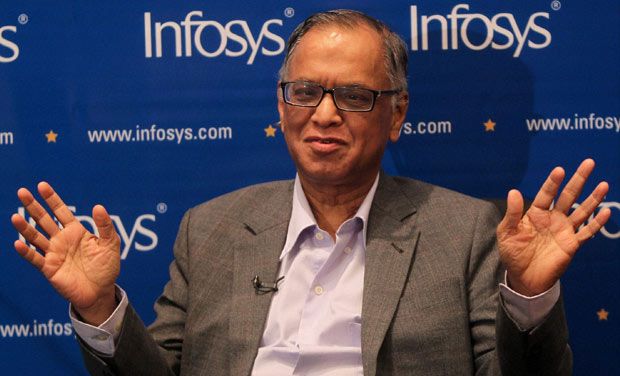
I am sorry, Mr. Narayana Murthy

Dear Mr. Murthy,

I know my apology is coming rather late when you compare my criticism, which was rather quick when you decided to come back to set things right in the company that you started with other friends. 

Now, as promised you have, probably, selected someone with right credentials to lead the company. Hopefully, the company will gain its lost ground and march forward to become one of the greatest enterprises in the world. 


You see I should have heard to my alter ego, my wife. She had more matured thoughts. She was forgiving and accommodating about your decision to come back in order to salvage the company you built. I still have difference of opinion but I think I have to become broadminded and become more empathetic. 

Recently I was watching a clip from a Tamil movie on Facebook. The actor in the scene implored everyone to respect someone who speaks the right things though the person himself may not be setting the example by actions. The actor felt that the world needs good messages, it doesn't matter we act on it or not. And if we look at Infosys, it has a good track record of having good principles and keeping up with it. 

Unfortunately, I became one of the men in the crowd who threw stones at Mary Magdalene instead of being a better person like Jesus of Nazareth. 

I am sure you will forgive me for the harsh words and taunts considering I am one of the many Indians who felt let down by the blip in an otherwise cleaner record. After all, we admired you and your organization for what it has stood for. 

Most importantly I have learnt that I should be more restrained in judging others and be open minded. After all, wouldn't I expect the same when I falter?

Cheers,

Ganesh 

Tuesday, December 09, 2014

Google and Its Invites

One of the best things about the four-odd years that I worked at 20:20 MEDIA was the lunch time. Not necessarily for the food that all of us shared, though that as well. It was primarily because Naru would be around. Almost all in the Chennai branch would look forward to hearing his stories and lessons on almost everything in life. They provided great intellectual stimulation and, yet, were amusing at the same time.

Pointing to the food laid on the table he would often say, "First go for the item that is least available. After that anything else."

For a long time, I didn't understand the profoundness in the statement. Now, it does. It is based on the fundamental economic principles of supply and demand. When something is available in short supply, the demand tends to be more. So it makes good economic sense to grab the item before anyone else does. What is available in plenty can be had at leisure.

Google is one company that has used this as a tactic quite effectively by creating "artificial scarcity" while launching products. You see the conventional wisdom during a product launch will be to make it available to everyone instead of restricting supply. But on the other hand, Google creates excitement in the market and makes customers yearn for its products. They probably understand well that as human beings we tend to value things that are difficult to come by. Also, our natural tendency is to show off what has been so acquired. And thus, they are able to create a pull even to their commodity product, such as Gmail, and to concepts that are rather innovative, such as Wave.

Today, Gmail is available to anyone. But way back in 2004, when it was launched in 2004, it was only through invites. It was not available for everyone. You couldn't go to its site and sign up for it. Some "blessed ones" received the invite from Google to use it. And these would get invites that they could share with others. And that's how Gmail percolated.

Since then, Google has used this invite strategy for important launches. But somehow Wave didn't create a "buzz". Then again Google Plus used the same approach. I have no clue whether Google Plus is a success or not. At least, I don't take it as seriously as Facebook or Twitter. But that is not failure of the launch tactic by itself. Actually, the approach did create the necessary excitement.

So when recently a friend, with whom I had apparently shared the precious Gmail invite 10 years ago, shared an Inbox invite as reciprocation, I wasn't greatly excited due to the history of continuous disappointments. But I was certainly keen to check it out.

While Inbox does roll many functions into one app and does make sense to use it, I only ended up uninstalling it. Interestingly, I do use Gmail and Google Calendar quite a bit. Still, Inbox isn't appealing. Probably that I am hooked to Gmail and see it another app doing the same job a waste on the precious storage space on my phone.

On the other hand, I find Google Now, which among other things also picks up information from my Gmail and presents on home screen, more useful.

When I read that OnePlus One is also using the same invite tactic, I was a bit amazed. Is this a good approach for a hardware company? While the reviews do say they are great value for money, why would the brand not rush the product to the market? Are customers so excited about it that they don't mind putting their buying decision on hold till an invite pops up? Aren't there brands which have better pull and probably offer the same or better proposition?

Will OnePlus One become the Gmail of hardware or will it fizzle like Wave needs to be seen in the coming days! 

Tuesday, November 11, 2014

Social Media and Customer Service: Part 2

Very recently after a bit of shopping and late dinner, I stepped into Ben & Jerry's (an ice cream company and part of Unilever Group) outlet in Leidsplein in Amsterdam. What should have been a sweet experience turned out to be bitter after encountering a service representative at the counter. The young girl  at the counter was surprisingly rude and condescending. Either she was young and untrained or she had forgotten her customer service training.

I was very upset. Partly to rant and partly to give feedback to the organization, I chose to tweet about my experience.

Next morning, I received a reply from Ben & Jerry's NL handle asking me to DM/mail my complaint. I wrote a detailed mail to the company about my experience at the outlet. Three days passed and I didn't get a response. And I tweeted back. This time I got a response that someone will reply on mail.

Soon, I received an email. The representative thanked me for feedback and promised to "make-up" for the bad experience.

Though I was heard, apologized to and "promised to make up to it", I felt their social media customer service was not evolved. Pretty much like the customer service girl at the counter, I felt the social media representatives were untrained to handle complaints. Or probably they were not trained otherwise.

And here is why?


Two things that irritated me were the usage of "Chunky Thanks" and "(n)ice" while I was giving feedback. Here is what corporate houses that use social media have to keep in mind.

  1. Respond appropriately: Earlier I had somewhat similar experience with redBus, too. Customer Service Executives handling social media complaints are probably are not trained to handle the complaints in a holistic manner. It feels as if just responding is counted as victory in social media. There is no follow through or closing the complaint. 
  2. Using associations properly: While it would have been quite appropriate and positive reinforcement to use "Chunky" and "(n)ice" words if one was a happy customer. But when someone is complaining, it only acts as further irritant. Companies have to be careful to tailor their responses according to the situation. 

Maybe social media customer service is quite nascent and hence companies recruit very young and over enthusiastic kids. One doesn't usually come across immature response say in more evolved form of customer service channels such as call center or chat or email. It is probably time then for organizations to consider the channel more seriously. Or maybe corporate houses do consider it seriously and have process; my experience probably is an exception. 

PS: Ben & Jerry's did "make it up". They sent me a branded ice cream spoon! Unfortunately, I don't eat ice cream much and I am little old to be excited with the spoon. If someone wants it, I will be willing to give it away. 

Thursday, September 18, 2014

Death of SMS - 2

It was early 2000s when fresh from college and couple of months into working that I, for the first time, had a cellphone of my own. Of course, the mobile services in Chennai was introduced sometime in the later half of 1995. It were the days when the outgoing calls were charged at Rs. 16 and incoming at Rs. 8!

In fact, SMS was not even part of the initial mobile service. When it was introduced, it was free!

Then as all fairy tales come to an end, I received an SMS from a friend stating that the messaging service was going to be charged and that if we forward that particular message to ten more people it will create a momentum and authorities will continue to keep the messaging service free. Alas, it was not to be true.

The world has changed much, since.

Now very recently, I received a message on Whatsapp that reminded me of the SMS I had received then. It also urged the receiver to forward that message to all those in the address book and when everyone does it hoped Whatsapp will be forced to keep the service free. As you know Whatsapp becomes paid app after a year's free use.

But that is not the interesting part. I wrote about death of SMS almost a year back. Recently, I met my good friend and ex-colleague Karthik DS. Karthik is Vice President at Akamai. While discussing about messaging apps, he told me that he had asked his team members if they used SMS. Out of the 100 odd people that he manages only one answered affirmatively!

Think about it. How many of us actively use the SMS facility? Even if there are many, I am sure the numbers are constantly coming down.

Today in my opinion SMS is largely used for two things.

  1. Signed in updates: For getting important messages from institutions whose service we avail. Banks, airlines, online sites, insurance...Technically, these are one-way communications. Either you send or receive. 
  2. Unsigned spams: Companies that want us to buy plots, computers, phone or Internet connections. 
Even if we receive an SMS from a friend, we are quick to ask or check ourselves if they are available on Whatsapp. We then would most probably shift our conversations there. 

What is changing? Aren't Mobile Operators worried about losing income? Why have we changed the way we message? 

  1. Zero sum game for mobile operators?: Are mobile operators losing revenues, here? First of all, they have already made their money by selling bulk SMS packages to marketers. Even if they are losing revenues from the end user segment, they will make it up in Internet revenues. There was a time when we used to diligently choose an SMS plan. Today, I am not even sure what SMS plan I am in. Probably, I am paying for a service I don't use!
  2. No more Plain Jane messaging: The only interactive feature or the erstwhile SMS was the delivery report option. The new messaging apps have added a lot more zing to messaging. To start with profile pictures, ability to see who is online, group chats, emoticons, ability to send files. It is certainly more fun. 
  3. Opportunity for Skype and Gtalk: Unlike the traditional messaging, Skype and Gtalk have great opportunity to use their existing strengths to leverage this new consumer behavior. Skype, especially. I am not sure why these companies have not been able to leverage this space. Gtalk at least did something by trying to combine SMS and Gtalk into one. I hated it so much that I decided to keep them separate. Skype on the hand is the company that I bet on. They already provide great calling service. What would it take Skype to emulate Whatsapp? It could do wonders to Microsoft. 
  4. Where is the money?: The messaging services like Line, WeChat and Kakao Talk seem to have cracked the code. But Whatsapp which has over 400 million customers has so far not unveiled any plans to commercialize except for the subscription fees. Will customers relent is to be seen. But on the other hand, Facebook after buying the messaging service is now promoting Facebook Messenger, heavily. After resisting the attempts to download a separate Facebook Messenger, I finally caved in last week. But shouldn't it worry Facebook that its users have to move out of its primary social media app and return if required? 
Messaging apps have already made SMS irrelevant. I may be thinking about this a bit too much, but can these messaging apps next kill the voice calls as we know it? Imagine if all of us had Skype, then we will probably Skype and not call. It will be true VoIP, then. We may not need numbers, just account. A bit too much, do you say? 

Sunday, December 22, 2013

Social Media and Customer Service: Part 1

Before I begin, on a very different note, please avoid any of the private bus operators if you want to travel between Mumbai and Pune or vice versa. Shivneri buses operated by the Government are very efficient. 

Coming back to what made me pen this post; my very own experience of social media 's power in bringing a corporate "down to its knees" and make it listen to a disgruntled customer. More importantly, today organizations seem more worried a cure rather than prevention. Cure here would mean that organizations are willing to act upon escalation of complaints on social media rather than building robust customer service organization and processes that can prevent escalation on social media. 

Recently, I had to travel from Pune to Mumbai, from where I was to board a train to Surat. I used redBus.in to book my ticket. Before booking I went through the Terms of Use. Do read, could be useful if you intend to use redBus to book tickets.

So, on the designated day I reached Purple Metrolinks boarding point opposite to the Pune Bus Stand on Station Road. The bus was supposed to leave at 5.30 am. I reached the stop well in advance. I waited. At around 5.40 am an outlet next to where I was supposed to board the bus opened. As I approached the outlet, I realized that it was Neeta Travels' dealer and not Purple's. I resumed my waiting there. The arms of the clock seem to be ticking faster, then. My train was at 11 am from Bandra Terminus. And I knew that it takes a minimum of four hours on the private buses and was worried that I might miss my train.

Then it became 6 and then 6.15. I started getting restless and checked with the Neeta Travel's operator. He said that Purple's service was bad and the buses were cancelled often and they were always late. I made frantic calls to Purple office and no one picked. Finally, I picked up a ticket with Neeta and left Pune at 6.40. At around 7, I got a call from someone at Purple asking me where I was! Not keen to have a conversation I just told the guy that I left by Neeta and cut the call.

Immediately, I also mailed redBus.in narrating the story that you have been painstakingly reading so far and sought a refund. That was about two months back. And then the waiting game started again, this time with redBus.

After many mail exchanges, numerous calls and waiting for about two months, I realized that if I didn't escalate the issue to higher ups, I will probably never get a refund. While I used LinkedIn to connect to the officials of the organization, I also went to Facebook and Twitter. Usually I would avoid bashing anyone on social media. I don't think that is a good practice. I would prefer using these social media forums only if I have exhausted all other channels of redressal. Two months of waiting and no response meant it was time. I left a harsh note about the customer service and their refund process on both forums.

Voila! Within an hour, I got a call, a mail and couple of messages on the forums asking for details. Two hours later refund was done. Followed by confirmation calls and a mail. And a request if I could remove my social media bashing!

As a customer, I was happy. As a marketer, saddened. While organizations are taking social media appearances and image seriously, are they missing out something?

To be continued.

Monday, November 18, 2013

Democracy and House Party

At ITM, the five of us were a very close knit gang. After college, work split us though the bond was intact.

And now, after about ten years all of us are in Chennai. We all got together on Whatsapp. Suddenly, it felt as if we were back in the small room at Vanniyambathi Street in Mandaveli, though virtual.

We decided to to have a family get together. And that's when I realized how difficult it was to run the country in the democratic set up.

Here's how the rest of the story pans out or should I say fizzled out.

1. Date: Since weekdays were impossible, there was an agreement that it has to be on a weekend. But would that be on a Saturday or Sunday, that was the question. I preferred Saturday while other friend preferred Sunday. After a bit of persuasion, we decided on a particular Saturday. But soon after agreeing, few days later one member informed that he was not going to be available that particular Saturday. Now, thankfully we all quickly agreed for the next Saturday.

2. Make, Deliver or Go Out: Initially the plan was that it would be a potluck. Each household gets to make a particular dish. While the idea was good, after some considerations we decided to go to a restaurant. So we started discussing which place and type of food. At this point, I noticed that one particular friend wasn't communicating. So I called him. As I had anticipated he wasn't happy going to a restaurant. So we decided to order and I offered to host the meeting at my place.

3. Biriyani or Pasta: The decision was to order bucket biriyani. Just as we got close, a friend checked if we could order pasta instead of biriyani. After discussing the palate of people, we decided against it. Just as we finished the conversation, we realized we had nothing for the lone vegetarian in the gang. An additional logistic load.

Of course as the day neared, I had a hunch. So three days before our meeting, I called each of them to reconfirm. As I had thought, two of them said that something had come up at home and that they couldn't make it. That was three days before our grand meeting. Finally, there was no get together, no biriyani. Just some irritation and acidity.

Now if you were patient reading all these trivial details about dates and biriyani for an insignificant meeting between friends, I thank you. All these happenings reminds me of the state of our nation. It makes me wonder if Democracy is bane or boon to our country. Is it helping the country move forward or pulling it backwards?

Take Andhra Pradesh turmoil for instance. One party brings the state to a halt as it wants a separate state to be carved out. When a decision is taken, the rest bring it to grinding halt fighting against the division. Take my own state for example, the power starved Tamil Nadu. Kudankulam Nuclear Power Project was planned more than a decade ago. The construction of the plant started in 1998, now in 2011 we have protests about its safety.

Seems like democracy in India is only letting the nation take one step forward and two backwards. The consensus building exercise is a task juggernaut with too many voices and so many power centers.

Would an autocratic rule be the answer? Would someone who can rule with an iron hand be better for the country?

And then I think about this example and feel proud that India a democracy. Because the basic bedrock of democracy is that citizens are intelligent. And that ultimately the power lies in their hands.

Think about how China and India have dealt with one of their biggest problems - the burgeoning population. While China decreed one child policy with strict enforcement. Any exceptions was dealt with strongly.

India too had a brief enforcement through vasectomy. But otherwise, India's strategy to controlling the population growth was and has been based on - advocacy and public relations. No one can ever forget hum do, hamare do (we two, ours two). You could see it everywhere, the inverted red triangle. TV programs, Radio Streams, Hospitals...The messages appealed to people's good sense. Apprised them of the benefits. No coercion, no punishment. In fact, if I am not wrong there were no incentives, as well. It was freewill.

Becoming republic was probably the best gift that our leaders gave us. But I guess with it also comes along different voices often with narrow vision. With Federal system, the power becomes fragmented. And this is a scenario not just in India. The United States of America witnessed shut down recently. There are certainly challenges, but I guess this is the better form of governance.

In the end, it is a two way process. People have to exercise their choice carefully and their representatives in the Republic have to act responsibly. Idealistic? Is that too much to expect?