Showing posts with label Human Behavior. Show all posts

Saturday, February 18, 2017

Swacch Bharat and Dog Poo

The day Indians start picking up their dog’s poo, India would have become Swacch. Before you start mocking my thought let me admit that spitting and urinating are far worse habits of Indians and far bigger endemic. I acknowledge it. But allow me to make a point. 

You will agree that most dog owners, especially the ones that have pedigree dogs, belong to the upper rungs of society. This cross-section of people (it is safe to assume) usually have better education, exposure and affluence. Then the natural assumption is that they would be far more involved in issues such as sanitation and cleanliness. 

The truth though is that this section of the society is probably not as sensitive as we assume they should be. And that includes me. I have a dog now and had one more a few years ago. For all the 11 years that Cheeku lived with us, I never ever cleaned up poo that he dumped on the streets, roads, and pavements. I was never responsible. And till about a year back, I never picked up after Pumpkin. But now I do. 


So what changed? As a stay-at-home husband who had an opportunity to live in Amsterdam for a year, I found too much time at my disposal and hence I signed up for dog walking services. In addition to walking a dog for a minimum of an hour, the most important part of the job was to pick up the dog’s poo and dispose it. Things were easier. Most parks and pathways had special plastic covers stocked solely for this purpose. One could also easily find a dustbin to dispose of the filled bags. That was my initiation. 

When we returned to India, I came back with my new habit. Every time Savitha, my wife, and/or I take Pumpkin for a walk, we ensure we take one of these plastic bags that we bring back home from shopping to pick up Pumpkin’s poo. Thankfully for us, there are many dustbins in our locality so disposing of filled bags is easy. 

We, probably, are an exception. We live in a relatively affluent locality with nice pavements and roads. Often during my walks, I find dog poo in the middle of the road and on the pavements on which probably an unsuspecting person would have stamped upon and probably slipped making a long stretch of poo. 

It is not that Indians don’t know about hygiene and cleanliness. We probably have very high personal hygiene levels but when it comes to sensitivity to public hygiene, we are uninitiated. 
Neither is it the first time we are learning about the importance of being or becoming Swacch. One of the important teachings of Mahatma Gandhi was cleanliness. Why do thoughts not translate into habits? What would make us sensible and responsible as far as public hygiene is concerned?


Probably, I am very pessimistic about India ever becoming clean. But then, if the crème-de-la-crème of the society cannot take responsibility of cleaning up after their dogs, how can we expect the masses to stop spitting and urinating? 

PS: A slightly modified version of this blog was submitted to Avenues Harrington Road, a monthly journal which appeared in print in the February edition. 

Wednesday, May 25, 2016

How To Quit Smoking & Other Addictions?

In 1995 when I was pursuing Hotel Management at IHM, Chennai, a new young F&B Services lecturer during his introductions mentioned that he was a smoker. After his eloquent spiel, he encouraged that we ask him questions. Without a second thought I asked him why he smoked. As soon as I had done with my question, I realized the folly. The whole class was laughing, not sure whether at his position or at my mindlessness.

Anyway, he took it well and explained how smoking increases the nicotine level in the body and with time when the levels come down, there is a desire to smoke again and maintain the levels. And thus the addiction.

Soon after that I picked up smoking. From 1995 till about 2000, I smoked. Of course, I was never a heavy smoker.

Then on January 1, 2001, I decided to quit. It was no resolution. It was just a desire to quit. And I did. For a pretty long time. Then suddenly one fine day, I lit a stick in 2006. Since then I have had a discontinuous relationship with tobacco.

Do you suffer from an addiction - smoking or drugs or a relationship? Relationship? In my opinion, loss of a loved one or a break up, can cause similar and probably more stress than withdrawal from other forms of addiction.

How do we overcome addictions?

I am no expert either in medicine or psychology but I have experience to share. And I know that this is not a holistic view.

Here are my "two cents" on the subject. In my opinion, the major contributor to addiction is the periodicity and frequency. If you are a smoker, one would understand this better. In my case, the smoking was always at certain points. Here is how my day burned. At 10 am soon after reaching the office, then at around 11.30 during a tea break, the essential post-lunch smoke, evening tea break and, finally, at the end of office hours. It was clockwork.

Interestingly, I never have had the urge to smoke on holidays or when I am at home. If my professor was right the nicotine levels should have reduced and thereby increasing my urge to smoke.

So this is my hypothesis. It is not necessarily the nicotine or any other chemical as the case might me. More important is to become aware of the "habit". More than anything else, the withdrawal symptom sets due to abstinence.

The most grueling aspect of kicking an addiction is to actually go through it. The disruption of pattern causes stress and emotional suffering. Often we are not adept at handling such situations even if we have undergone such experiences in the past. As I said, I am no expert on addiction but I find an experience recounted by Dan Ariely very relevant. In the video you will hear about Dan talking about an injection that he had to take to counter a liver problem. Not necessarily the same scenario but in  my opinion reward substitution is an effective way to manage addictions. If you are not a braveheart, then a diversion may help deal with the misery.

Of course, time is the biggest healer. Perseverance and patience helps. 

Friday, April 22, 2016

Why I hate Jugaad?

Jugaad has come to define Indian innovation. Books have been written about it. It is being glorified and acknowledged in B-schools.

To those uninitiated, it is the innate ability of Indians to find innovative solutions to problems faced. The uniqueness is that they are created with the least possible resources.

Initially a fan, I have come to think of it as our bane. It best represents the Indian mindset. Don't get me wrong, there is a need for people to be frugal but that should not be the only way of life. Certainly, jugaad is something we all Indians must try to overcome.

Why Jugaad?

As I said, Jugaad is the child of lack of resources. As a nation that is still emerging from being a third world country, we have been trained to do with what is available. For us everything has to be cheap and best. It has become ingrained into our subconscious. Short-cut is now hardwired into us. Even if we have resources, we will still think of cutting corners.

What does it actually mean? 

Jugaad is not innovation it is adaptation. It is manifestation of larger inherent ailments. It is:
  1. An indicator of our short term thinking which means that we are limited in our urge to find a holistic solution. Thinking big and real innovation as a result are lost cause.  
  2. They are certain recipe for danger. Safety and security is not even an afterthought.  
  3. They also indicates our rebellious nature. To rebel without a cause. Which in turn means immaturity. This is the worst aspect of our conditioning. Our need to bribe and break rules (honking, going on the wrong side of the road, spitting & dirtying, refusing to wear seat belts or helmet...) is a result of our inability of appreciate and accept even bare minimum standards and be disciplined. 
Yes, jugaad makes us more adaptable and resourceful but kaam chalao is primitiveness. As human beings we should grow continuously while retaining elements for adaptation. That's how we have become a better race.

Jugaad is a malady and we need a proper course to weed it out. Not a short way to fix it. 

Monday, May 18, 2015

When Casteism Hit Me

Before I begin, let me warn that some might find the post offending. If you don't want to read it, please close the window and move forward. But if you are a good Hindu and want the religion to grow, please read it with an open mind.

Let me also disclose that I was born into a Brahmin family. I am married to a wonderful lady who is not a Brahmin. I have grown to become an atheist though I do feel like a Hindu. I know it sounds strange and, probably, I would explain this sometime later in a different post.

My father passed away on March 4. Like any other important event, Hindu religion has several rituals that needs to be performed. And the son is at the center of these rituals. Even as my father was being cremated, my troubles started. Towards the end of the day even before I could receive my father's ashes, the Vathiyaar (the person who performs the rituals) informed that he will not be able to perform the procedures for the rest of the days. If you did not know, there are important procedures till the 13th day. And, then, of course, there are more.

His reason was that my wife is non-Brahmin. And as per "rules", he was not allowed to perform the procedures and my wife did not qualify to be part of these rituals. I dismissed it thinking probably he was an exception. I thought, rather foolishly, that with education and various reform movements things had changed and that differentiation based on caste was a thing of the past. At least in Chennai which is a metro. Of course, I am not naive to think that the tyrannical system is obsolete.

After speaking with quite a few Vathiyaars, it was clear that no one would perform the rituals if my wife was part of it. The options for me then were:
  1. Have a non-Brahmin perform them for me which was not going to be acceptable to my family which again proves the entrenchment of the caste system, or, 
  2. Not have my wife participate in the procedure.  
I chose the second option. As atheists these rituals were meaningless for both my wife and myself. We felt that she was better off focusing on her career than extend her holidays and fret over the ridiculous system. But a pall of gloom has descended upon the entire family. They felt bad that someone in the family who was so much involved during the last few difficult days of my dad was now being forced not to be part of the rituals. Of course, it is hypocrisy that I chose to perform the function with Vaathiyar instead of not doing any ritual at all. 

This incident is not an exception. I noticed this distinction (discrimination based on caste) in Thirukadaiyur about which I have written earlier.  

Of course, Brahmins are not the only ones who perpetuate this heinous system. It is practiced by everyone. Many Dalits still don't have the 'rights' to visit village temples. There are walls built creating a ghetto for them. And even today in many villages lower caste members are served tea in different glasses in shops. And the guys who discriminate are not necessarily Brahmins, these are what media refers to as 'Caste Hindus'. 

Someone can ask if this is true only for Hinduism. No, of course, not. In fact, differentiation is a common thread that runs among all religions. Roman Catholics and Protestants differ and have fought war. And that Shias and Sunnis are at a bloody war. Even Shvetambars and Digambars have different views in Jainism. No religion is left untouched.

So why am I focusing on Hinduism? It is because as I said though I am an atheist, I still believe that I am Hindu. I have been raised as a Hindu. I firmly believe that the principles and philosophy that it is based on is far more scientific. But importantly for me, I believe that the religion is more open to change. But the caste system that discriminates is the only negative element that doesn't seem to have gone away. 

Thursday, November 14, 2013

Indians and the Finishing Touch

If Frenchman Jacques Bigot had dark skin, he would look like an Indian old man. He was a short man with sharp pointed mustache. He was heading a special project of building the factory for the organization where I worked. As the infrastructure was nearing completion, he called me in to carry out branding at the factory.

Jacques Bigot had an eye for detail. He was also very particular of sticking to schedules. And while communicating, he was straight and blunt. Despite that it was fun working with him. Despite pushing everyone to commit to a plan and ensuring they stick to it, no one could ever hate him. He was jovial and fun loving.

After the completion of branding at the factory, I went a little late into the factory next day. I was feeling proud that I had done a good job and was sure Jacques will be impressed. As I entered I found Jacques outside and as soon as he was me, he welcomed me by giving a warm handshake and thanked me. I felt good. Then, he said "come with me". I knew there was something else.

He took me to one part of the factory and said "I don't blame and you have done a good job. But I have always noticed that Indians are not good at finishing things properly". Then, he showed me the mounds of mud that had accumulated on the skirting under each of the poster. He said though the posters were properly placed, the vendor had left without clearing the dust. Then he went on the point out to the pencil marks on the wall that had been etched around the poster. This is usually done to ensure that the posters are aligned properly but now they were part of the wall too.

At first, I was upset. Then after some thought I felt Jacques Bigot wasn't wrong. I have myself had such experiences after a visit from a service provider - electrician, AC mechanic, plumber, carpenter. Am sure you must have experienced this as well. Bits of wires strewn around? Pieces of wood, plastic, copper wire, dust that we clean up.

This can be experienced almost everywhere in India. Have you experienced the sudden bump on the road throwing you off balance and giving your back a big surprise. Or the other kind which emerges half feet above the road surface. Not sure if Corporation staff were planning a gutter closing or a speed breaker. The height of the pavements differ or are laid without a thought. Sometime, you wonder why the pavement was laid at all. Or take the Kathipara Grade Separator in Chennai for that matter. In one particular part, the rain water stagnates. And worse the surface is very uneven in other parts. Such a massive project handled by a professional organization with huge amounts of money invested!

Why does this happen? Lack of interest to complete our tasks fully or are we insensitive to the "finishing". 

Monday, September 16, 2013

Teacher's Day, Lesson Learnt


During my school days, I was given opportunities to present Thought for the Day during the assembly session. During one such opportunity I was looking at various proverbs to present. And I came upon this - Those who can, do. Those who can't, teach!

I shared it with friends and we had a good laugh. Of course, I refrained from sharing it in the assembly for obvious reasons.

Couple of weeks back, I realized how immature I was to have made fun of teachers. And how difficult a job they have.

On my visit to my parents place, I chanced upon my niece's Maths test papers. She is an excellent student and a very smart kid. But on that test paper I found a mistake. The problem involved division.

In my mind, it was simple. And I wondered why she could not solve it. I resolved to teach her division. After all, I know division; it is such a simple thing. I scored 91% in senior secondary. And at work, I had trained couple of my colleagues.

But in the process of trying to teach, I ended up scaring my niece and made her dislike me. I didn't have any patience. While I did the sums, I couldn't teach her the basics. I expected her to pick up things just by looking at how I was solving the problem. I ended up admonishing her.

Over the next few days, I realized my blunder. The little girl, who used to like me, now was scared of me. And I started to feel miserable.  

Then, I admitted to my little niece that I was wrong and was sorry for making her feel terrible. Thankfully, the situation was salvaged. And now my niece again looks forward to my visits. On my part, I ensure I don't get into teaching mode. 

Teaching requires not only the knowledge of the subject but also the skill to impart or disseminate it to the students in a manner that they are able to grasp it. A teacher requires enormous amounts of patience. I learnt it. 

Moral of the story: I now realize that teachers are also doers. They just create many other doers. Those doers shouldn't assume that teachers aren't doers.
  

Monday, July 15, 2013

Why I Don't Like Watching Roger Federer Matches?


"When you watch Roger Federer play, you are not watching tennis. You are watching art!"

If this is how I feel, then why would I not like to watch him play?

Unfortunately, though I have been playing tennis for more than five years now, I started following the sports on TV only very recently. All these years when Federer was reigning supreme, I didn't watch him play. Then when I started following the game, Federer's dominance is on decline.

Though he is losing matches rather easily nowadays, watching him play is still a delight. I believe that he has single-handedly raised the level of tennis played today.

To see him lose makes my stomach churn. I get acidity and lose sleep. I usually switch off the TV and go to sleep when I see signs of Federer failing.

Do you feel the same when you see your favorite star go through such situations?

I realize that it is not just Federer. I have the same going for Kamal Hassan too. I still can't watch Moondram Pirai or Ek Duje Ke Liye!

Do you feel the same when you see your favorite star lose?

That also makes me wonder, why can't I just enjoy the sport? Why do I have to take sides? Is that even possible? 

Tuesday, April 30, 2013

Communicating in Social Media

 
Those in the communications industry know that there are two forms of communicating - one-to-one and one-to-many. As the terms indicate, one may want to converse with only one person at a given point of time or with more than one at the same time. Basically it is about impact and relevance.

Till about a couple of months back almost anything that I posted on Facebook was one-to-many. Be it some story from the net or photographs from holidays. This despite that I have created a variety of lists categorizing friends.

Savitha on the other hand is more discrete. Her sister is far more conservative and prefers not posting photos on Facebook. She and her husband prefer to share pictures only with family through mails or Picasa. In fact, my sister-in-law observed that the practice of publishing huge albums, detailing the action in respective lives, on Facebook was more Indian behaviour. Hard to say if that is true, but does seem to be.

After that I did practice restraint, but the narcissism got the better of me. And after a recent holiday I posted photos on Facebook, for everyone too see. I must say, the number of likes is directly proportional to the feel good factor.

Photos are still tolerable.

What really amuses me is a spouse wishing the partner on birthday or anniversary on Facebook. "Happy birthday, husband (or wife, as the case maybe). Or "I miss you". Recently someone added pictures and details of the shradh for their deceased family member. There was this one occasion where a lady on Twitter spoke about the state of her undergarment during her menstruation.

I wonder if these people would do that in real world, especially in public. I am sure they won't. But social media somehow removes inhibitions. 

How do you wish a friend on his or her birthday? Call, SMS or on Facebook? If on Facebook, do you send a private message or write on the wall. A look at my wall on birthday tells me that people prefer the wall to a private message. Nothing wrong but why wall and not a private message, I wonder. Should be convenience.

I do not have to emphasize the need for exercising caution while communicating on Social Media. It is surprising that while we are agitated by the privacy settings of some social media sites, we ourselves do not practice discretion while we converse.

Here is a model that we could use while communicating in social media. It is based on personal experiences, observation and logic.

Before communicating, consider whether you want to communicate to an individual or a group. Though the group could be anything from a crowd to a close knit group. The message could be a personal. For example, say health records or bank details/passwords. Even things like I love you or my pantie is stained kind of information. Or message could be non-personal like news, jokes, trivia or any information in the public domain.
 
Based on this, you may want to:
 
  1. Whisper: If it is a personal message, please keep it strictly one-to-one. Use tools that will preserve the piracy.   
  2. Relay: Even if there is nothing personal about it, it is better to be one-to-one. While using any tool shouldn't cause any harm. Would still prefer that one uses an email or private message rather than a social media.
  3. Hidden truths: Imagine a secret society. The membership and communication is strictly controlled. Secret society or a close knit group, open communication with outer world is strictly avoided.
  4. Loudspeaker: Tweet or share in public. It's information, for the public. 
Some mediums provide only one-to-one communication while others provide multiple options. The choice of communication tool has to decided based on the audience and the relevance. Having said that it is a personal choice of what to communicate and how to communicate. For others, there is a model here. 
 
How much this thought is going to be relevant to people on Facebook, I am not sure.

Thursday, January 10, 2013

Why do men rape?

The recent rape and unfortunate death of a student in Delhi has stirred intense emotions in India. Reading the reports on this dastardly act does stir up anger and fear even in men. No man wants any women, family, friend or otherwise, to go through such gruesome episode. But it does happen and I am afraid this may continue to happen. Read the pondering of a girl who articulates her experiences and shares her state of mind which I am sure is how many women would be feeling, today.

But why do men rape?

Some of the things that is commonly attributed are

  1. Women dress in a manner to incite a rape.
  2. Women travel late in the night, alone, making themselves vulnerable
  3. And many more such nonsense

This The Hindu article throws some light into the remedy and the causes. But still why do men rape?

Shouldn't men know the answer, for it lies within and not outside?

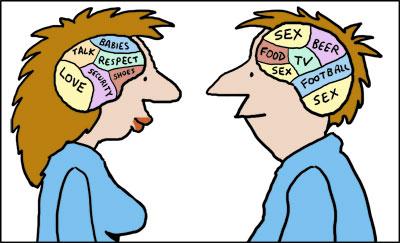
This cartoon shows the comparison the human mind - males vs. female brain. While it does make light of the state, it may not be far off from the mark. At least I cannot lie to myself. Men are more obsessed with sexual act then the fairer sex.  

The Maslow's hierarchy of needs classifies Sex as one of the basic physiological needs for man (or woman for that matter). Just that men's needs are insatiable till death and the subject perennially dominates the thoughts. Not an excuse to commit the crime, though.

Can rape actually be avoided?


Castration, death or any other punishment is not going to undo the damage that already has been done. It can act as deterrent. But will it ensure that no such acts take place again? Do you think the countries that have strict laws and which are enforced religiously have no crime? Many countries have death penalties, but does that ensure that no murders or other gruesome crimes take place?

How many of us stop for the signal? Why do we spit when we know it is not a good habit? We happily (men, mostly) urinate in public. We don't stand in queues. To follow rules and be disciplined is not just in us. What I am trying to imply is that if we leave the emotions to a side and think about other dishonorable acts, like murder, stealing and those I have just mentioned, rape is also an act of an immature mind. A mind which despite knowing still commits what shouldn't be. 

Deterrence by exemplary punishments is one way. But avoiding? How do you avoid rapes? I am unsure.

Friday, May 11, 2012

Management lessons from tennis court

During my hotel management days, students were advised to pursue a degrees from universities because Hotel Management was a Diploma program which could hinder chances of pursuing higher education.

So, in order to safeguard my future, I enrolled for BA Sociology. Not sure if I understood and followed whatever I studied as part of the course. But then something must have registered while mugging for the exams. One of the chapters that I studied was on the difference between Psychology and Sociology. Don't remember much but the crux was that human beings behave differently as individuals and very differently when in a group. Got a taste of that at the tennis court, recently. And that too from the set of acquaintances and friends with whom I play regularly.

So like any other day, I reached the court. And like any other day, there were already people playing. Usually, when a set gets over, one of those players come out to accommodate the person waiting. This day was different. As the game got over and I got up to play, I noticed that no one was planning to sit out.

My ego was so hurt that I walked out and determined never to play with those with whom I have played for years. But then, quick calls from them followed by apologies, I relented and went back to playing.

One thing that I learnt in the episode was that the demand and supply theory also applies to gentlemanly behavior. That this applies in the tennis court with supposedly the erudite and sophisticated was interesting. Now, it is not for no reason that it is one of the fundamental economic theories.

But then evolution is also in human nature. It was discussed as to how we can avoid such situation. We decided to apply the Inventory Management technique - Last in, first out (LIFO).

Apparently, it is a common practice in other clubs. Just that our learning curve took a bit longer to arrive there. Or probably, it was become fiercely competitive.

Thankfully, we have now managed to go back to being gentlemanly on the court.

Sunday, October 23, 2011

The Power Of Nudge


The Economist is probably the most reputed magazine in the world. I have always wanted to subscribe it. But never did.

Then I started receiving the these emailers from The Economist. Just Rs. 500 for a quarter! Enticing, isn't it? Upon reading the mail, I came to understand that it was an invitation price and that the subscription rate for the following quarters is a substantially larger figure. The payment is automatically debited on the credit card one authorizes. And of course, if you do not want further subscription, just reach out to the publisher and it is done.

Easy, isn't it?

The Economists' marketing/circulation department have been brilliant in this campaign of theirs. They realized the important of Status Quo Bias which means that people have tendency to stick to their current situation.

I am no different. Now every quarter, my credit card is charged for the quarterly subscription of The Economist which I hardly find time to read. But then it is almost a year and I still haven't stopped the subscription.

If you are in a position where you have to influence the behavior of people, then Nudge by Richard Thaler and Cass Sunstein is just the book for you.


A fantastic read, the book offers tremendous insights on how people behave. So it is not necessary that you must be a professional to leverage the ideas in this book. You could be a parent trying to figure out how to make your kid eat good food. Or you could be a family man wondering how to secure the financial security of the family.

Even if you don't intend to influence or nudge others, you will certainly learn a thing or two about your own behavior.

Must read! Do visit their blog and follow them on Twitter. 

Friday, November 26, 2010

Facebook eMail: Evolution or Revolution

It was in 1998 during my post-graduation that I opened my first email account with Hotmail.com. That was also the first time I had ever experienced Internet. My excitement soon turned into great depression.What was the point in having an email id when I didn't have anyone to mail to!

People who had an email id were all my classmates whom I met everyday. I was communicating with them daily. Even if I wanted to write an email what would I write?

Slowly, things changed. I found people whom I could mail. But the real use of email started only when I got into a job. Then, I opened a new account. Again it was a Hotmail id. Little later, I moved to Yahoo! Now, those days Yahoo! was very popular because one could also chat. Yahoo! Chat Room was a great place if you wanted to find a date. I tell you, they were a craze! 

Interestingly, now I had two ids each with Hotmail and Yahoo!.

See how beautifully the economic principles work. During the early 2000, there were far too many email service providers. And when there is too much of supply, the customer always has an advantage. There was this benevolent email service provider called - chequemail. No not check-mail, it's cheque-mail. Now, this service provider wanted to share the money made in advertising with its subscriber base. Wow! Yes, I did jump. Voila, I did receive a cheque for Rs. 50, once. Then? Then the service provider closed down, much to my disappointment. Good things don't last too long, pretty much like the romance in marriage!

Then, I changed to USA.Net. I liked it. But as luck would have it, that too closed. Actually, the free service closed. That was the indication of the dot com burst, maybe. Reluctantly, I reverted to Hotmail and Yahoo! Of course, I should mention that intermittently I also tried various other service providers, too. I can't figure out the rational but that's what it was. 

And then Gmail happened. Google as a brand had become very desirable. With a tactic of invite-only launch, Google further heightened the desire value. I remember begging for an invite from couple of gatekeepers. Actually, Gmail from usage and aesthetics perspective is nowhere close to the others. But then the charm and desire was high. In fact, Gmail didn't even have a chat software at the time of launch. Now, that is the brand pull.

Today, an email id is not only your key to mails and chat, it also gives you access to other services that service provider may have. One id with Google is good for you to access Blog, Orkut, Calendar, Reader, Finance...

Now, here comes Facebook with email service. Except for the fact that it talks of a concept of getting all communication that we do confluence at one point, I didn't understand much. It is proclaimed that it would change the way we communicate. I guess usage may change my opinion, but for now it looks hazy. But then when I was reading about Facebook's move, I somehow was reminded about Google Wave! Not sure why, but that is how it felt. While Wave itself failed, I do think if marketed and packaged well, Wave could be the next Official Communication tool. In fact, it could be the future of Social Networks!

One of the reasons why Wave probably failed was because it was duplicating what Gmail was already offering. Wave was chat and email mixed at the very core. It, in fact, could have been the true Gmail-killer. But then it was a separate offering requiring a separate id and log-in. It certainly was a pain using it. But can you imagine if your current Gmail behaved like Wave! I certainly would have loved it.

That leads me to important email behavior. We have and probably will continue to have two sets of email communications - personal and professional. I am already panicking. Most offices block Facebook, in which case I may find it more difficult to access personal mails. But that leads me to wonder whether convergence of email with social network is necessary? Conceptually, it feels as if it would make life easy. No need to log in into more than one window. But then, in the technology world there are two distinct factors to be considered:
  1. Technologies that enable change
  2. Consumers move or remain inert (Wave being a classic example of consumer inertia) 
Going by my own behavior, while I do use the messaging tool in Facebook, it is not my primary or for that matter preferred email service. But as Master Oogway in Kung Fu Panda says future is a mystery. Honestly, I don't think Ray Tomlinson would not have fathomed how email would grow and become an integral part of our lives. Then, who am I to risk a guess? But I do think Google had or still has a chance to revolutionize email while Facebook is evolutionizing Social Networks.

Tuesday, November 09, 2010

eCommerce: The Buying Online Story

Arun Kumar Dhadwal was a sort of role model. I was in the 1994-97 batch at IHM, Chennai. And he taught us French and Food & Beverage Service.

Thin-framed man, he himself passed out of the alma matter just a couple of years back. Passionate about French, he also pursued course in Alliance Francaise de Madras and became proficient in the language. After completion of the Diploma in Hotel Management, he decided to pursue lecturing rather than get into the industry. He was very good, I loved the man's style, his demeanor and the way he taught us. He was refreshing in that old Government-run institution.

It was a period when Computers were quite rapidly penetrating.

On one of those lazy afternoons after our free lunch at the QTK, sorry the Quantity Training Kitchen, I settled for Arun's class. And he said something which excited and left me confused. Blame it on the lunch that caused the blood from brains to flow into the primary digestion chamber, maybe. Arun said that internet was becoming popular the world over and that it was changing the way people shopped. He said it removed any barriers in geography. As I said, he also taught us F&B service. And since wines and spirits were in the second year subject, he took the example of how one could order a bottle of wine from a different country through internet sitting inside the confines of his house.

Wow!

Ok, I knew what computers were and how they looked. But I couldn't imagine how a bottle of wine would drop out of those white boxes!

If you are laughing at my naivety, please consider that even today the vast majority of Indians are still not blessed. Internet has touched only about 70 million Indians. And 1995 was another period. I got my first email id only in 2000 and no one to email to!

Things have changed and I have become more aware. Most importantly, e-commerce is a reality and is happening.

2000 and for the next few years was what everyone remembers as the period of dotcom bubble and burst. Honestly, I think there were great ideas, but came quite early.

I can't remember when I first shopped online but the most vivid memory was ordering monthly groceries at Fabmall (now, India Plaza). I was super thrilled about buying online. I didn't possess a credit card but then Fabmall offered payment on delivery, so it enabled me to do the transaction. Incidentally, I was never able to complete my ordering and the page became invalid! And for a moment, I thought this transaction was not going to happen when I got a call from Fabmall and they took the order on phone. So, we probably cannot strictly say it was online shopping. It was almost-online shopping.

And when things changed, they changed quite drastically and I have used Internet quite heavily. Whether it is netbanking or shopping, I have bought a wide variety of products and services over the Internet. And I am not alone. Some reports suggest that in 2009 the e-commerce market was about INR 9000 Cr!

I did start as a skeptic despite having enthusiasm. Am sure many would think why should they shop online? There are many reports on net being an unsafe place. Is there a recourse if the product is defective? Net is only good for buying only some goods...

When I look back and think I seem to have shopped a wide variety of things in the last 10 years. And here are some reasons why I like online shopping:

  1. Romance in the delivery: Call me an technology enthusiast or visionary (terms from Crossing the Chasm), I have always been kicked about buying online. Though I couldn't muster courage in initial days, it was just matter of time before I picked it up. My initial shopping for groceries on net was to showcase to my folks that I was a responsible son, which I realize they would never acknowledge! I believe that I am a networking person. More so, if it's to connect to the fairer sex. And one thing that women loved was flowers, I had learnt. Ordering flowers for my interests across the country was enabled by the online sites. There is also certain amount of charm in the process. And I think the impression made is far more impactful.
  2. Almost everything under the Sun: Books and tickets (cinema, train and flight, in that order) has probably been the commodities that I have bought most online. Though, I have also bought jewelery, gift items, apparel, mobile phone and tennis racquet!
  3. It so bloody convenient: I was notorious for forgetting paying utility bills. Ah, and at one point of time, I had four credit cards and trust me finding the branch or ATM to drop the cheques was a pain. Skypak was an option but it had its own issues. Thankfully, net banking allowed me to pay these bills with a click. But more than paying through netbanking, it is the gateways that provide greater flexibility. 
  4. Research, compare: About two months back, I was seriously considering purchasing a sedan. In the first two car purchases, I never bothered to check for options or do research or performances. Alto and Swift were obvious choices. But now, surprisingly, in addition to test drives and speaking to lots of friends and acquaintances, I did so much of research, I can't believe it myself. A visit to Carwale and TeamBHP sites became an integral part of daily life. But I am not sure if I will order a car of the net? Will you? But you never know, if there is a strong motivator, I might. Why not? There was a time buying books meant going to Landmark. Today, I do a camparison between Flipkart, Indiaplaza and Rediff before ordering a book. You would be surprised the variety of prices the same book is offered for. And tennis racquet! Aren't we supposed to hold and feel before we purchase such goods!
  5. Recourse, of course: In the initial days, I bought an unbranded walkman (the small cassette player that Sony created) from Rediff. And as my luck would have it, it failed to play. I mailed Rediff and they gave refunded the money. I didn't have any issues. Even if there were, they were solved quickly. Refunds, apologies and a free gift vouchers took care of any bad experience. But yes, online shopping isn't all rosy. Recently, I ordered flowers and gift on Ferns & Petals and they terribly messed it up. You have to remember that when you buy from one of these online portals, you are buying it from some unknown vendor, unless it's a branded product. While I have had good experiences with both Rediff and Indiaplaza, there have been disappointments, too. But there is recourse if you are shopping with an established portal.
In this context the eBay's ad on the eve of Diwali is quite relevant. I am beginning to get excited to think of the future of eCommerce.

And of course, it would be interesting to see what is in store for the physical stores. Long ago during the dotcom bubble, I used to handle PR for eGurucool.com. Mr. Agarwal who founded the company during a seminar said that click-and-mortar has to work with brick-and-mortar. Have you seen Bharatmatrimony and Shaadi's marriage centers?

Friday, September 17, 2010

Business and Driving

Earlier, I had posted about how we make strategic decisions when we chose a route to reach a destination. A cheap(er) imitation from Thinking Strategically, a brilliant book on Game Theory by Avinash K. Dixit and Barry J. Nalebuff.

A look at my car would reveal to anyone that I have been rather impatient in my driving. The reasons could also be that I have not honed my skills. But many a times, it would just not be my fault. The road is full of morons. So, about a couple of months back, I decided not to get too competitive on the road. I realized that my goal is not to be first, it is to reach the destination safely without causing any harm to self, my co-riders and anyone else on the road. I also decided to stick to reasonable speed limit. I observed that in city it doesn't matter how hard you press the accelerator, you will certainly pull the brakes on red signals every few meters. Most importantly, you just don't gain time.

But coming back, there's certainly a lot of commonalities between driving and businesses.

  1. Availability of resources is limited: While in business it could be raw material, people, partners...the most important limitations in driving is the road. Whether you drive an inexpensive hatchback or an expensive limo, there is only that much tarr-ed surface. Demand is so high that any additional supply is usurped, quickly.

  2. Highly regulated: If the Company's Act is the bedrock for organizations and establishments, the most essential barrier to entry on the roads is the license. And just like businesses, you get a different license based on the market you want to drive it - two wheeler, four wheeler, heavy vehicles...
  3. Competition: Companies can be categorized based on their size. Similarly, one's presence on the road is measured by the vehicle driven. While larger presence has an impact, there is enough room in the markets and road to allow everyone to exist. But then everyone is fighting for a space and to reach faster. While drivers may not have the same common goal like companies in reaching out to same target audience, the common element is the direction. In that sense, racing and businesses are more similar.
  4. Strategy: Both driver and an organization has a fixed strategy, but make suitable changes based on the situation.  

So next time you drive, think you are conducting a business. A serious one. And if you are one of those who need to deal with road rage, here is a wonderful read. Helps!

Thursday, September 16, 2010

Don't Break That Coconut

Today, while on my morning walk, I saw a school kid waiting outside a kutty (small) Vinayagar temple with a coconut in his hand. His mom urged him to break the coconut. Apparently, his exams were starting today. Breaking the coconut is an integral part of the Hindu culture. I remember myself doing it just last week when I took my parents to a temple for a pooja.

On my return, I found pieces of coconut and shell scattered around on the road. It upset me a bit. I wondered why should one waste a coconut. When I was young, my dad told me that coconuts which were offered to God in this manner, referred to as sedurkka selutharthu in Tamil, was picked up by poorer sections of the society and consumed.

Now, as I saw those pieces of coconut flesh on the road plastered and dirty, I wondered to myself, if any person with even a bit of self esteem would pick up any of those pieces. It also doesn't augur well for the one performing this mindless act. They are wasting an expensive product thinking the God, if at all (s)he is there, will be happy. Now, I am quite certain that that God will only be sad about it.

But while I have grown to become an agnostic tending to atheism, I have realized that many such rituals were started to provide some meaning to our lives, often has profound meaning. So as usual I googled to find the meaning behind this ubiquitous act. And here is what I learned. But look at how we have adapted this ritual. Though I must say that this act of breaking the coconut on roads is more of a Southern phenomenon.

If at all one wants to pursue this act, do it well so that there is no wastage. Otherwise, you could simply offer it fully to some poor person. Or simply give it to the maid at home. With impoverishment so rampant, I am sure that that one coconut will provide good nourishment to a family at least that one day.

But certainly the meaning behind breaking the coconut has been lost in translation.

Monday, September 13, 2010

Employees In The Era Of Social Media

Till such a time that we discussed and gossiped in the real world, it was fine. 

Then somewhere Web 2.0 happened. All of us, who were till then laymen and consumed content, were vested with extraordinary powers to create and distribute content with far-reaching impact. It has become a strange world, since then. Free-speech has assumed new proportions.

Couple of days back, I had this conversation with a friend who works for one of the largest IT Consulting companies in the world. He told me that as part of the recruitment process, the company does scan the blogs of applicants. Now considering that I intend to be a salaried employee with no interest in the entrepreneur-adventure, does my virtual verbal diarrhea have any repercussions for my career? Considering that it is easy to be watched and tracked, does my online outbursts hurt my chances?  

I have made some positive mentions about one of my ex-employers. But completely avoid writing anything negative about any of my employer, present and past. And, clients are absolute no-no. So much so, I usually think twice before writing anything negative about a brand. 

Call me a coward, if you want, but am rather very apprehensive about being very vocal on Internet.

Earlier, I had written about Customer Service in Social Media Era. The reason for social media becoming spitting bag is that it is easy for individuals to do so. Now, who wants to go to a website and fill out forms or call a 10 digit number, only to press a few more. But more importantly, social media has become top priority  within the Customer Interaction Management industry.

I had this conversation with an extreme social (new) media enthusiast. He felt that it is absolutely fine with someone expressing his views in the public space. If I recall correct, he said that every individual is also a consumer. And that one should share their experiences with brands so that others can make an informed decision. Quite valid, I think.

It was widely reported that an employee was asked to leave after he made some reference to an institution in a blog. The employee and the employer both denied that the separation had to do anything with the post. In another case, an employee in a client servicing industry tweeted with negative reference to an organization because its staff bus was being driven rashly. While, his employer and the organization didn't have a relationship in India, they were working together globally. There was no damage in this case, thought it did ruffle some feathers and left a bad taste, I heard.
So, what is the desired behavior? Should companies monitor an employee's online avatar? Can social media acts of employees be considered exclusive of his work area behavior?  

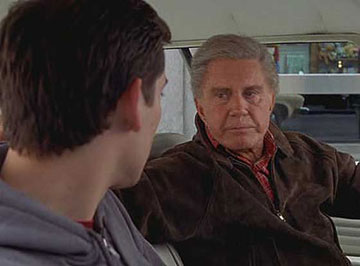
As I mull over these points, I am reminded of this profound quote from the blockbuster Spiderman about power and responsibility. I still remain confused.

Many companies, today, have evolved behavioural guidelines for employees. While I have not seen one, myself, I think it would certainly be drafted in such a way that it covers any liability arising due to employees' net act. On a side note, have you read any Sexual Harassment policy? Gives me jitters!

And, oh yes, Shashi Tharoor and Lalit Modi will go down in the history for being two people who lost their jobs due to Twitter, whether directly or indirectly. Now, I am mighty scared.

Tuesday, June 29, 2010

Research: Educating Consumers or Confusing 'Em!

There was a time when I have had bath with Rin, yes the one that is used to wash clothes. Reason, that was the only one available at the station during our trip to Chennai from Guwahati. It was an almost four day's journey and in those days Indian Railways had an absolutely fantastic record of running late by 13, 14 hours.

Things are not that bad normally. Over a period of time, just like the amount of products that vie for my mouth-share, the number of products that have become part of my bath-share is incredible. There was a time when a soap was enough for the entire routine. Today, the shower gel goes to body; face wash to, of course, face; shampoo to clean the scalp and conditioner to nourish it. Is this sign of prosperity or what!

The role of research reports to 'educate' consumers and 'modify' consumer's behavior to change or enhance consumption pattern is unbelievable. And you thought lobbying happens only with the Government.

Shampoo brands through systematic 'education' urged us to not use good old soap for the scalp. Reason being that the scalp is different from body skin and thus requires specialist product. Once shampoo established, conditioners came in. Of course, then you have afterwash conditioners! Again, since skin on the face is/was different, to 'complement' soap, face wash rubbed in. I still remember when I was young, we were asked to shampoo once a week sighting that the daily application of shampoo would lead to hair fall. But over a period of time, research reports suggested that daily shampoo was better for scalp care.

Staying on the same set of products, while driving back home, Savitha said that a report suggested use of block-soap should be avoided. I was quite puzzled. On quizzing her, she said that the reports indicated that a block of soap attracts germs, hence not good for the skin. Did I read something in between the lines? Of course, I did. To me it looked like a report from liquid soap manufacturers wanting to shake up the block-soap market.

For so many years, people all over the world have been using block of soap. Today, it has become a bad practice!

I came across another such interesting case. A news article whose headline barked - Eat Eggs & Reduce Weight! Wow!

Eggs were a strict no-no for me, considering I am not only big built but also diabetic, I felt very happy. But as I went through the article, I decided to stay away from egg diet. The report 'proved' that a two egg breakfast helps reduce weight considerably. Because of its properties, eggs reduce hunger pangs. Thus, ensuring that a person eats less through the day! Yikes! I would eat as much after four egg breakfast as I normally do and add to the lipid treasure chest (or should I say waist) that I have built, already.

There was this joke in Reader's Digest that I came across. The writer deletes a line from her article stating that pregnant women should stop eating Chinese food. When Editor asks why, the writer replies that she thought over as to what pregnant Chinese women would eat!

Not to say that research reports are all farce, but the amount that is churned out to induce behavioral change can often confuse the consumers.

On something similar but very different, do watch The Story of Stuff.

Thursday, June 10, 2010

Housewife, The Endangered Species

I probably belong to that generation where the parents and the kids, both, were in a great dilemma as to whether moms should go to work and bring in the extra moolah or sit at home and take care of the kids and family.

It was a period (70s and 80s) when the general income levels in the country were rather low. The economy was closed. The middle class leaned towards the bottom. Today, it might be slightly moving to the upper end. Liberalization, not only of economic policies but also the women-kind, has accelerated the rapid urbanization thus catalyzing the formation of 'un-supported' nuclear families.

The family now consists of parents, kids and 'integral and indispensible' maid. 

But if there is one 'breed', if I can say so, that is fast vanishing, at least in the upper middle class urbanized society, is the housewives. This, to my opinion is also true, to a large extent, for many other socio-economic classes on both sides of the 'equator'.

While, to start with, economics was the reason from many women to have ventured out of the borders of their house; today, it is all about women wanting to be independent. Making a career is about self esteem. Women, today, are equally and, in many cases, much more educated and aggressive. Emancipation of women has completely altered the social and family fabric. While it is creating tensions in the family bond, it does present great opportunities for businesses. Fast foods, packaged foods and restaurants are variant of one kind. What interests me is the opportunity to professionalize and organize the maid services. Difficult but great opportunity.

Today, it many not be considered an 'in-thing' for women to say that they are housewives. At least, in the circles or categories, which are reading this blog post or can have access to it. Some women upon pregnancy do chose to become housewives. But I feel that, in future, it may not be so. 

But why can't being a housewife be as cool as career woman.  Reasons are many. Most important being that if something is not monetized, it is not valued. Housewives are at best considered a free maid for lifetime who doubles up as a partner, for sex and other reasons, an ayah who takes care of kids and many times also a finance minister. Identification of housewives as a homogeneous group women who sheds tears watching soap opera has been quite detrimental. Another important reason is that housewives bind themselves and never invest in acquiring new skills or for that matter pursue their passion.

I do ponder if with passage of time, housewife species will become extinct. Should I feel bad about it? Can something be done about it? Or is it a species that has lost its relevance? Is it doomed to become extinct like many species that didn't survive the different ages? Will the new environment necessitate development of the new species - the Househusband?

Wednesday, June 02, 2010

All In My Mouth


When I was a small boy, I would be excited to go to the shop and buy the toothpaste. But those were the days when toothpaste came, as Henry Ford would have put it, any colour - so long as it's white. But then things have changed. So has what I consume for my oral hygiene.

Tooth paste: As I said, paste for many years to me was the white uninteresting Colgate. So when the color TVs arrived and Close Up ads played, I finally felt there was some hope. At the age of 10, I took a firm control over the decision to buy the toothpaste. Maybe I love red color or probably the mouthwash included in the paste was the reason. One of the most difficult moments in life is having to deal or converse with someone who has a bad breath. And I have dealt with many. The fear that I should not have a bad breath was probably the biggest driver. Also being a gynephilic, one has to send the right breath out. Those days, in addition to Colgate, brands such as Binaca (later, Cibaca) and Promise were the other options. Till about 2 or 3 yearsback, I was always a Close Up loyalist.


Lekin Master Ji, app ke daanth! Remember this line from Dabur Red tooth powder ad. Well, Dabur products were never in the contention. But a sudden chance and eagerness to try Dabur Red has changed the course of my oral care journey. In fact, Dentist's suggest that one should change the toothpaste, often. I believe the germs in the mouth also get used to a particular paste as much as the mosquitoes to DDT. And believe me I made a right choice in Dabur's product. Dabur Red comes into your mouth like an electric shock. It is bloody spicy and leaves a burning sensation long (maybe because of laung/clove) after you have brushed. I must say no other toothpaste has refreshed me as much as Dabur Red has. Encouraged by Dabur Red, I decided to try other products from the company's stable. And, again, trust me, you will love Meswak for its taste and feel. Dabur Herbal is also good but comes third in my ranking. Encourage by the overall experience, I recently bought Babool. Seems to be ok. But I think I will go back to Red and Meswak.
Tooth brush: As important as a paste but probably the most least involvement category is the brush. I, too, was very indifferent and brand un-conscious. It had to be less than Rs. 20 and SOFT. A while back, Savitha went to a dentist for routine check. The doctor advised her to use Colgate Massager. Huh, Massager! So, as a good wife, she decided to pick on for me. And that was when I realized that the value you derive from a product is directly proportional to the price of the product. Use it to, to feel it.

Mouth wash: Have you seen the ad of Listrine featuring Cyrus Sahukar? The first time I used Listrine, my mouth exploded pretty much the way it has been depicted in the ad. Except, cheeks stayed intact. The alcohol inside your mouth does have a telling effect on your eyes. And after you have gotten used to Listrine, any other mouthwash is a compromise. I did use Plax, didn't work out for me.

Floss: Now, I am quite certain that for an average Indian, I am more adventurous as far as trying out new products for the mouth is concerned. But it is not that I am, basically or generally, like that. I have this problem of food pieces getting stuck between my teeth. So, on one such occasion, I decided to buy a Oral B Floss. I found it too cumbersome to use and the fine plastic did hurt my gums. On a trip to Health & Glow, I saw a pack of floss. It was a toothpick at one end and a U at the other end with flossing ribbon. Worked well for me. I don't want to share gory details, but I can tell you that if nose could smell in between the teeth, one can die. That is exaggeration for elucidation! While big brands also have this type of floss, they don't seem to be in the shelves.

Not only expensive products but also these inexpensive and colorful plastic tongue cleaners have become part of the daily routine. My mouth has become very sophisticated and demanding customer. It makes me wonder as to what percentage of the grocery bill goes just inside my mouth. And how many brands and products fight for a piece of my mouth.

All this for what? Well, health. And, of course, to have a non-smelly conversation.

But from Marketing perspective it is quite interesting to observe consumer behavior. In my opinion, most of the products that we use for oral health are low involvement category products with high customer loyalty, especially for tooth pastes. On the other hand, brushes, except for mature customers, doesn't attract much of loyalty/stickiness. On the other hand, penetration of mouth wash and floss should be very low. It took me more than 30 years, to take the giant leap and that too without any obvious reasons. Walk into a super market, the oral products do corner a huge space!

The fight for my mouth-share!

Wednesday, May 26, 2010

Exceptions to the Rule


Marketing books suggest that in order to succeed, the product must be to the liking of the prospective buyer. And packaging plays an important role. Marketers do a lot of research to understand the behavior of consumers.

Ask a lady what her favorite colors are? Purple, Mauve, Lilac, Pink, Lavender, Peach...While men can't think beyond primary colors, women dismiss anything that isn't complicated. Read this nice post by Harsha Subramaniam on 'Why Men Are Colour Blind?'.

Savitha has often taken my mickey on the choice of gifts that my lady friends shower on me. Whether it is a T-shirt or a Body Wash, they seem to give me something of feminine taste. Things which are to their liking. But, if a man dares to wear a dress in 'feminine' color, he can be certain that there will be either explicit or implicit indications from people around that something is not 'straight'. A continued ignorance to such indications is definite path to be branded a Gay. No, not a happy man. Gay meaning homosexual.

So instead of wooing women, the correct market, the law of unintended consequences may apply and one might end up kindling interests from the not-desired market.

So remember that there are exceptions to the rule.

And I am STRAIGHT, Sam Boy!